When visiting the Museum’s pollinator garden between September and November, you’ll likely notice a fluttering cloud of orange around the violet blooms of Conoclinium dissectum, commonly known as palm-leaf mistflower. Look a little closer, and you’ll see that among those orange wings are not only queen butterflies (Danaus gilippus), but occasionally well-traveled monarch butterflies (Danaus Plexpus) on their migratory journey.


Monarch butterflies and queen butterflies are often confused since they belong to the same genus, share the iconic black and orange coloring and both use milkweed as their host plant; however, there are key differences that can help you distinguish between the two species.
Monarchs are a touch larger and can be various, brighter shades of orange. They also have thick, black veins on their wings creating a stain glass look. As for queens, they tend to be a richer, darker orange-brown color and their veins are fainter and less distinct. The most distinguishing physical trait of these two species is that queen’s wings have small white spots within the orange area and monarchs do not. Monarchs’ white spots are found only along the black edges of their wings.

Aside from physical differences, monarchs outshine queens in their migration patterns by a landslide! Queen butterflies are considered non-migratory and stay in warm areas year round, including our beloved Sonoran Desert. If queen butterflies do “migrate” it is often a quick jump from lowlands to higher elevations to escape the dry season.
Monarchs, on the other hand, are known for their long journeys. Often serving as a symbol of resilience and hope in the public imagination, monarchs undertake epic migrations that span generations. Eastern monarchs travel up to 3,000 miles from the U.S. and Canada to central Mexico for the winter and western monarchs typically migrate to California coastal areas.

The exact path an individual monarch takes remains difficult to determine, however, thanks to community science and new technology we continue to learn more about this remarkable species that crosses multiple states and countries.
Traditionally, tracking a migrating monarch relied on tagging the butterfly with a small sticker and then relying on others to observe and report sightings of that tagged individual. Museum volunteers began tagging monarchs on the grounds in 2009 in collaboration with the Southwest Monarch Study. By 2022, over 150 monarchs had been tagged as they migrated through the Museum. While this method provides valuable data, the precise routes these butterflies take remains largely unknown.
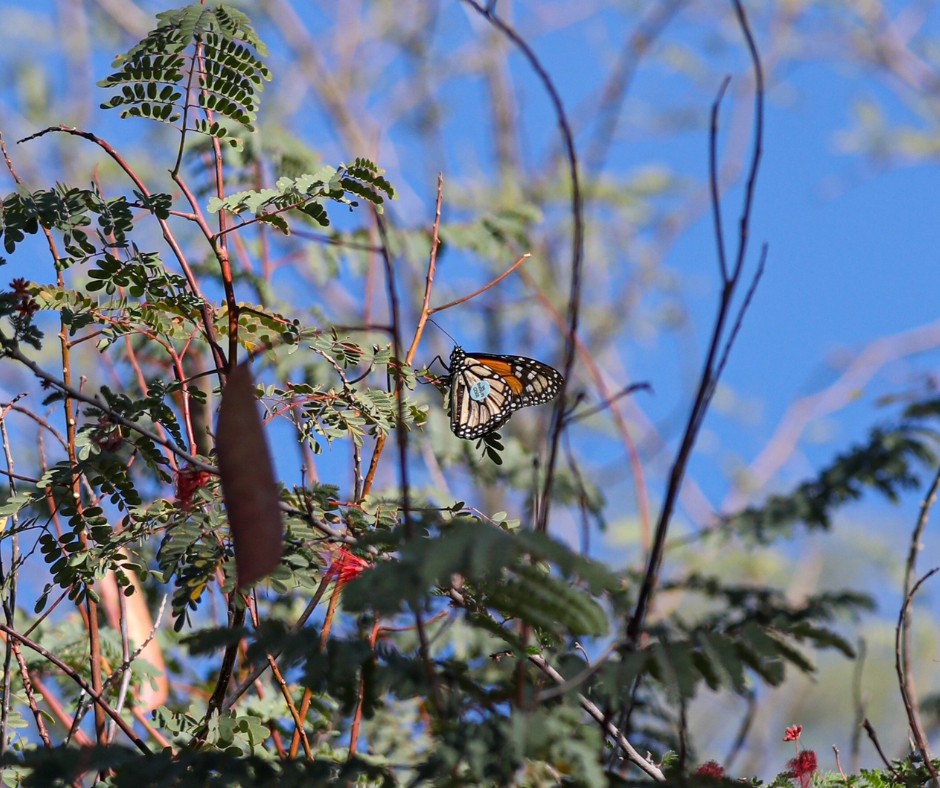
Now, researchers and enthusiasts can track individual monarchs using GPS-equipped tags! In October 2025, the Southwest Monarch Study began using these new tags on monarchs in Arizona. These ultralight tags communicate with Motus towers, but outside the range of these towers, movements are recorded through the Project Monarch Science app by community scientists.
Two monarch butterflies spotted at the Museum were recently marked with these tags after passing through our pollinator garden. They are named “Desert Mojo” & “Coco.” Anyone scanning with the Project Monarch app can detect them on grounds and although they may (or may not) move on from the Museum, they are currently the only GPS tagged monarchs in Tucson!

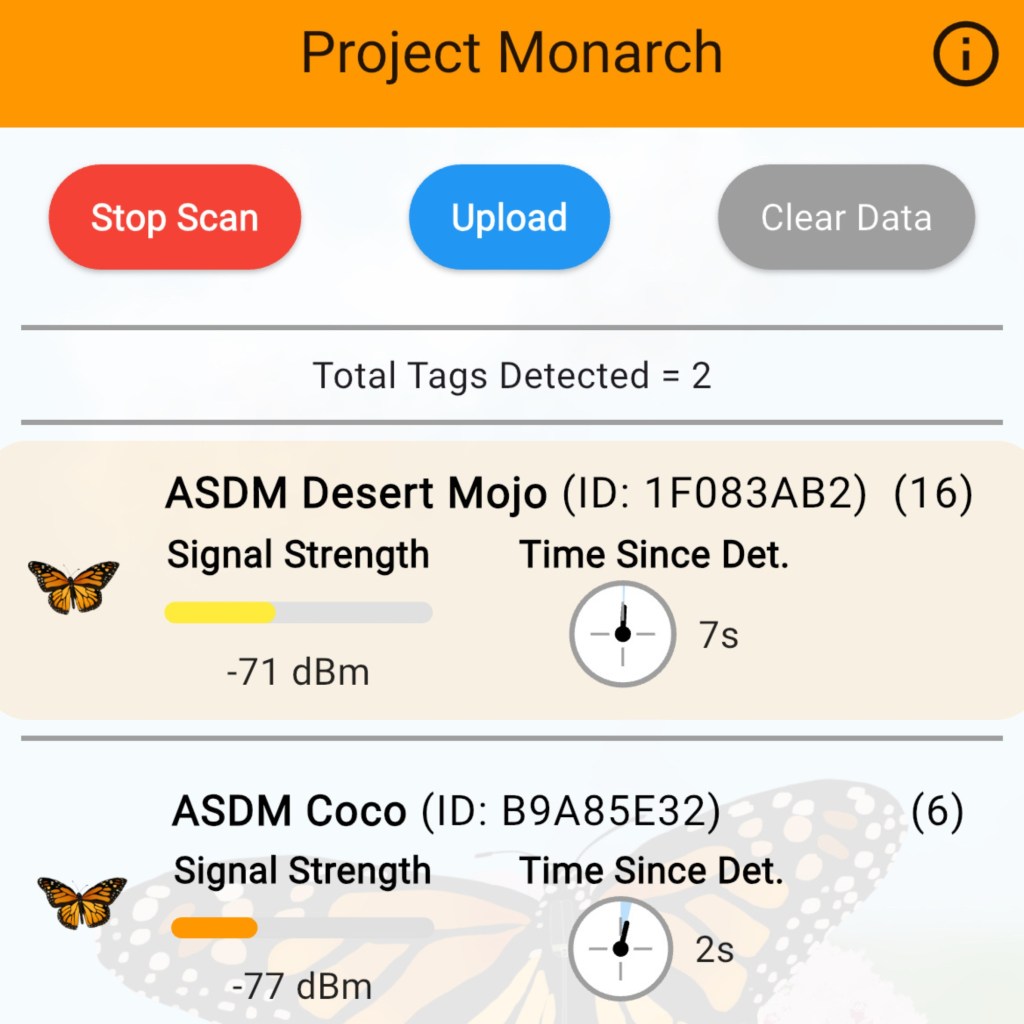
We encourage you to download this free app to track our new friends Coco and Desert Mojo and follow individual butterflies as they travel across the country! Visit the Southwest Monarch Study website to learn how you can report monarch sightings, monitor milkweed, or even learn to tag monarchs yourself.
Written by Gracie Heim, Content Marketing Lead and Katie Predict, Research Scientist
 Desert Diaries