Featured image by Wendy Witzig
You may already know that invasive grasses and other invasive species are bad news for the Sonoran Desert’s unique ecology, threatening native species like saguaros and desert tortoises.
Invasive grasses like buffelgrass, red brome, and fountain grass not only provide ample fuel for fires but also thrive in their aftermath, creating a vicious cycle and positive feedback loop known as the grass-fire cycle. As grass invades and promotes more frequent fires, it intensifies grass invasion, leading to even more frequent and destructive fires. The consequences are nothing short of devastating impacts to our native desert species and, alarmingly, risks to our health.

This image shows buffelgrass thriving after a fire. Notice how it has choked out other native plants and shrubs.
Volunteers pull buffelgrass on “A” Mountain. Manual pulling of invasive grasses is an essential management strategy and relies on a strong network of dedicated volunteers.

We often discuss the ecological impacts of invasive grasses to our region, but there are important health and safety implications as well. When wildfires ravage the delicate desert landscape, the resulting smoke can have immediate impacts on our respiratory system including asthma attacks.
Wildfire smoke is a complex mixture of gasses and particles. The fine particulate matter, known as PM2.5, contains particles less than 2.5 microns in diameter—30 times smaller than the width of a human hair! The smaller the particle, the deeper it penetrates into our lungs.
Wildfires also generate ground-level ozone, a major component of smog. As vegetation burns, it releases two of the key components that facilitate the formation of ground-level ozone. This harmful air pollutant mirrors the adverse health effects of fine particulate matter, including respiratory inflammation and damage.
The long-term effects of wildfires on human health require further investigation and research. Calling all scientists!
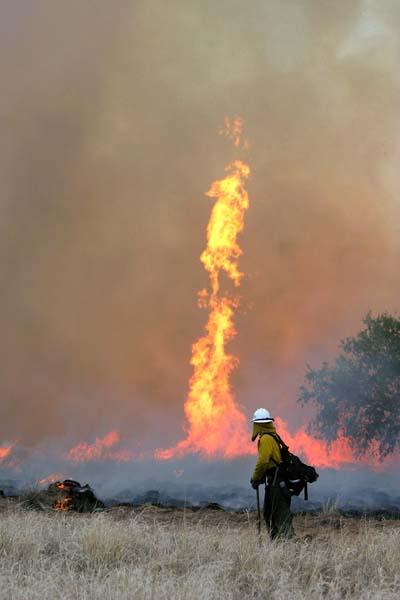
During wildfires, evacuations become a necessity to protect lives. However, the trauma resulting from fleeing in the face of fast-moving flames or returning home to a pile of ashes can have profound and enduring impacts on our physical, mental, and financial well-being.
As the hot and dry conditions of early summer are ideal for fire, we are starting to see fires across Arizona in the last month. Plus, as we wait for the monsoon storms to bring much-needed rainfall, the possibility of fires caused by dry lightning looms large.
Spread the word and take action! Together, we can safeguard the Sonoran Desert’s fragile ecosystem and protect our health. Stay vigilant, support initiatives against invasive grasses, learn how to identify invasive species, and advocate for wildfire prevention and mitigation measures.
Take action today! Be prepared and learn how you can minimize the effects of wildfire smoke.
 Desert Diaries