Sabino Canyon, one of Tucson’s most cherished natural areas, is renowned for its rugged beauty and diverse wildlife. Among its inhabitants is the Gila Chub (Gila intermedia), a rare native fish species found primarily in this region and one that has faced significant challenges in recent years.
In June 2020, a lightning strike ignited the Bighorn Fire, which raged for over a month and threatened the fragile ecosystems of Sabino Canyon. This devastating blaze put many native species at risk, including the Gila Chub. Because of their limited range and ecological importance, efforts to conserve them became a priority.
In response, the Arizona-Sonora Desert Museum partnered with Arizona Game and Fish Department (AZGFD) to safeguard the species by temporarily housing Gila Chub during the fire.
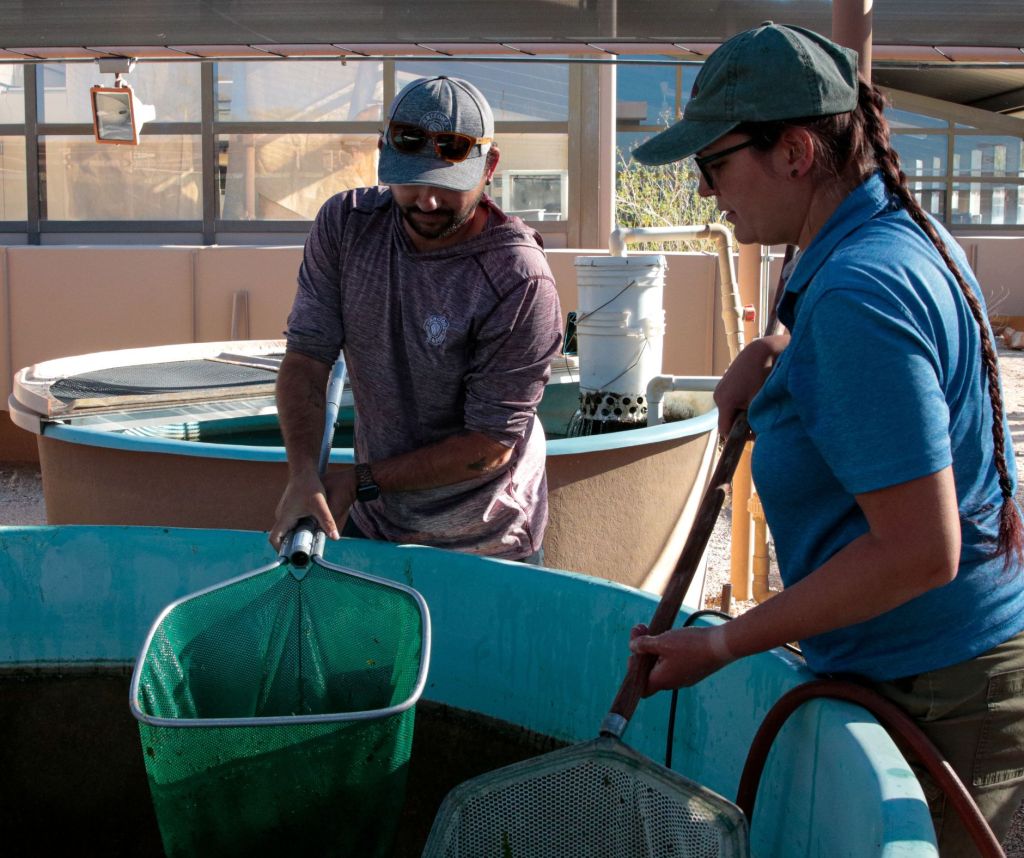

“Native fish are a unique component of the Sonoran Desert’s biodiversity,” says Brian Hickerson, Gila River Basin Native Fish Coordinator at AZGFD. “It’s hard to put a value on what these fish mean to society or individuals, but the fact that you can leave Tucson and, within 30 minutes, find a desert stream teeming with native fish is an experience worth preserving—for current and future generations.”
After years of growth and care, 243 of our scaly friends were finally ready to return home!
Desert Museum and AZGFD employees worked with the Forest Service to successfully transport the fish to Hutch’s Pool in the Pusch Wilderness area of Sabino Canyon in May of 2025.
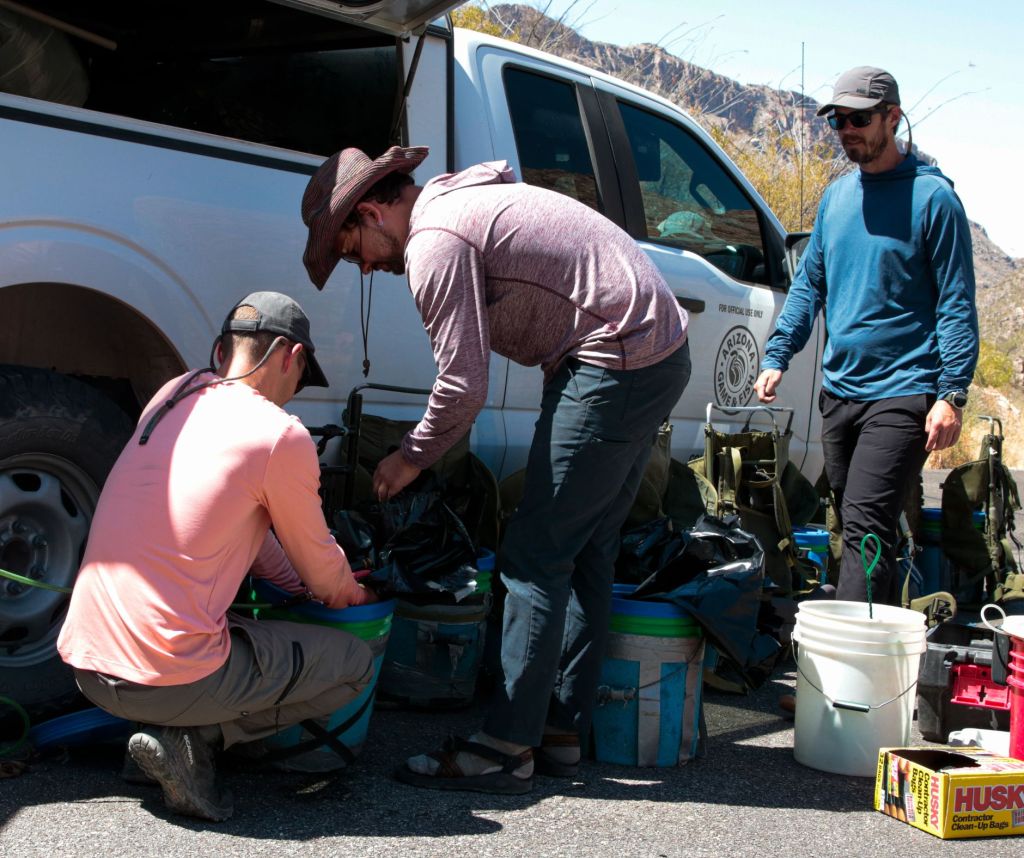
The fish were carefully transported in aerated, treated water to reduce stress then, placed in oxygen-filled bags inside 5-gallon buckets for the hikers to carry on their backs to the release site. The group hiked roughly 8 miles roundtrip in the heat of the day and remarkably all fish survived the journey—though the hikers joked they were the ones who should’ve been riding in cool water!

Hutch’s Pool was chosen for its depth and size, making it an ideal refuge during drought—and it doesn’t hurt that it’s stunning, too.
Located near the upper edge of designated critical habitat, it helps ensure the Glia Chub occupy as much protected area as possible. With natural rock barriers limiting upstream movement, this spot gives them the best chance to survive and repopulate downstream.
After a challenging hike, the group took a well-earned lunch break and enjoyed the peaceful oasis tucked within the vastness of the Catalina Mountains. One by one, each person had a chance to release the chub into their new home, marking a hopeful new chapter for native fish in Sabino Canyon.


Moving forward, the population in Hutch’s Pool and near the East Fork of Sabino Canyon will be regularly monitored by Arizona Game and Fish Department staff. These ongoing efforts will help ensure the fish adapt well, grow in number, and continue to thrive over time.
This reintroduction is more than just a conservation win. It’s a reminder of the resilience of native species and the power of collaborative stewardship. Thanks to years of care, coordination, and a shared commitment to the land, visitors to Sabino Canyon can find native Gila Chub swimming in its waters and witness a living piece of Arizona’s natural legacy.
By Gracie Heim, Content Marketing Lead
 Desert Diaries