In recent decades, populations of important pollinators have been declining throughout much of North America. Beekeepers in the U.S. have been suffering from unusually high rates of colony loss of the domesticated honey bee (Apis mellifera). The abundance of several bumblebee species in the western U.S. has declined dramatically, with at least one species now believed to be extinct. And both the eastern and western populations of the monarch butterfly have declined precipitously, reaching new record lows in recent years.
With these continued declines, pollinator conservation has become a national priority. Not only are wild bees important pollinators in agricultural settings, they pollinate over 80% of all flowering plant species (Ollerton et al. 2011).
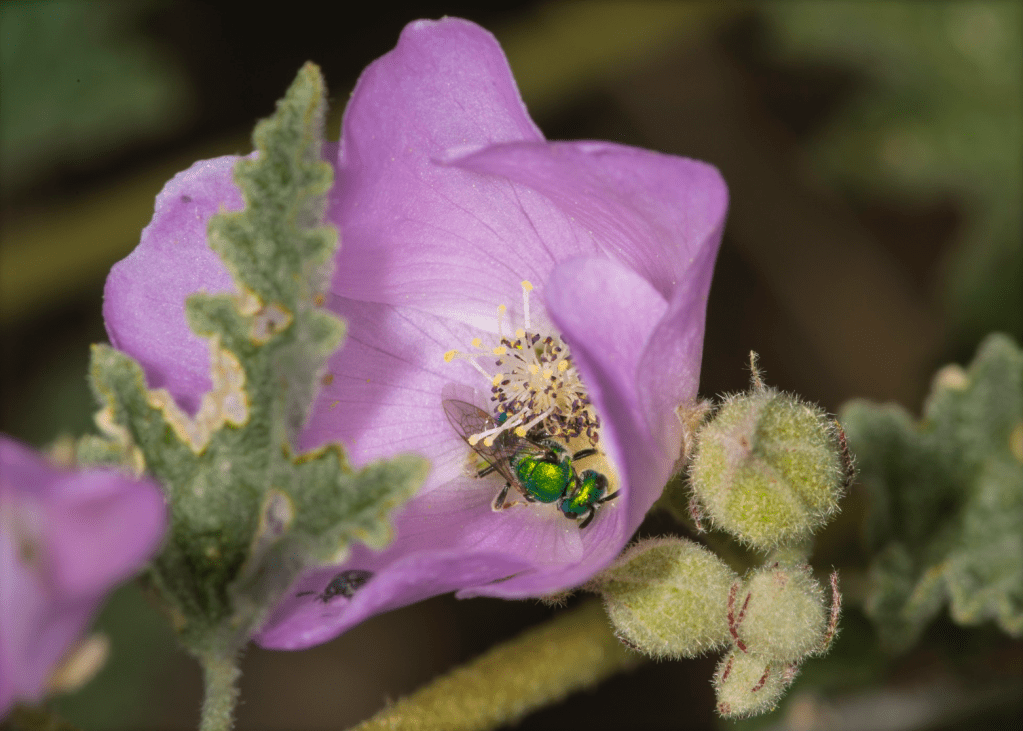
The Sonoran Desert is home to a tremendous diversity of bees, boasting more species of bees than just about anywhere else in the world, yet we know very little about the status of wild bee populations here. Growing evidence suggests that the same factors driving honey bee declines (loss of habitat, poor nutrition, pathogens, and pesticides) may be impacting wild bees throughout North America. On the bright side, a substantial body of research has shown that wild bees can thrive in urban environments if their modest food and nesting resource needs are met. Moreover, many of these needs are already being met through landscaping practices that are common in Tucson. For example, homeowners that use native plants in their landscaping, simply because native plants are easy to care for, are also providing food for wild bees, and for wildlifemore generally.
So the good news is that there’s a lot you can do to help out our Sonoran Desert bees without spending a fortune to makeover your yard. Below we outline some simple steps that you can take to make your yard more bee-friendly.
Bee Friendly Landscaping Practices
• Plant native plants – Bees and the flowers they depend on for food have evolved togetherover millions of years. As a result, our Sonoran Desert bees are generally better able to utilize Sonoran Desert plants than plants from other parts of the world. Here in the Sonoran Desert we have no shortage of attractive trees, shrubs, cacti, and succulents with which to landscape your yard. The Desert Museum’s plant list is a good starting point for selecting plants that will support a wide variety of pollinators.
• Plant flowers in clumps – Most bees will visit only one or a few types of flowers on each foraging trip. They learn how to collect pollen from a certain type of flower, and then tend to stick with it, which allows them to be efficient foragers. Therefore, most bees will benefit more from a larger patch of a single flower species than a patch containing many different flower species. Planting a flowering tree (eg. palo verde, mesquite) native to the region provides the same benefit because a single tree provides an abundance of flowersof the same species.
• Plant a diversity of flowers to attract a diversity of bees – Since many bees are are picky eaters (i.e. specialists), a greater diversity of plants will benefit a greater diversity of bees. One patch of a single flower species will go far to support bees, but if you have space, plant several patches, each with a different species.
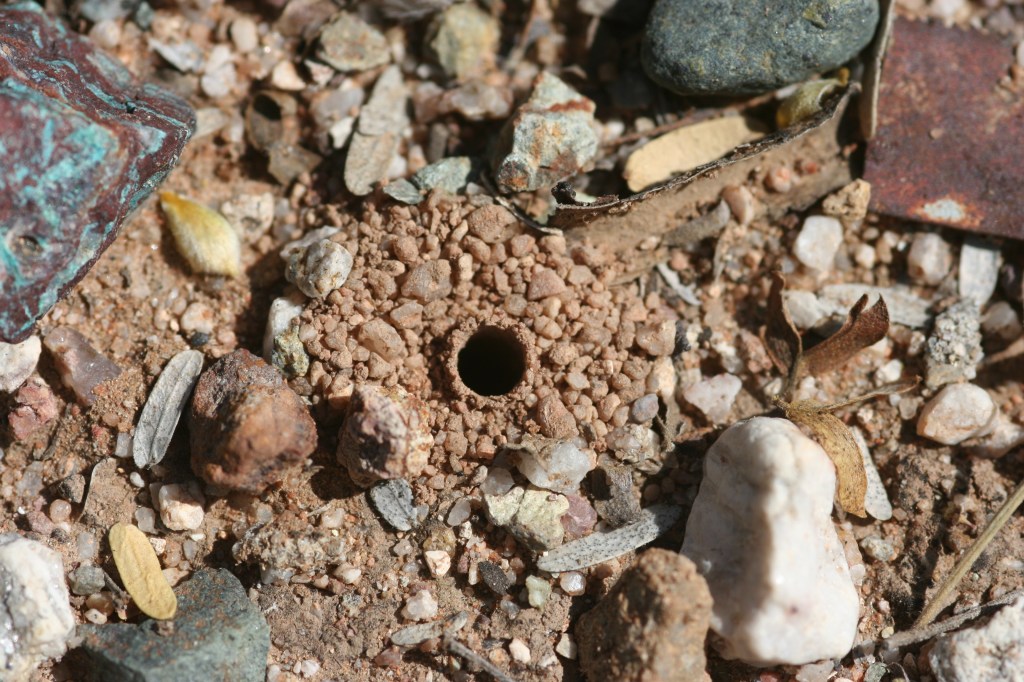
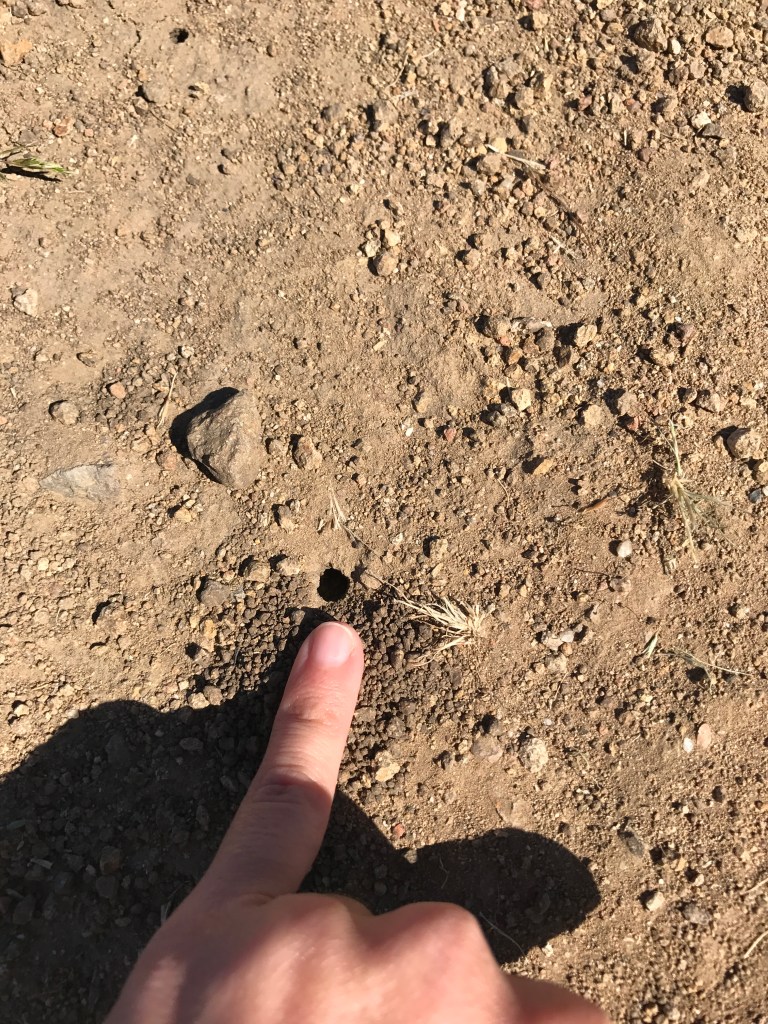
• Provide nesting habitat – This is one of the simplest things that anyone can do to help bees. Since most of our wild bees nest in the soil, they need some bare ground into which they can tunnel to build a nest. This means leaving a portion of your yard free of gravel and mulch. These narrow tunnels will be difficult to spot because the diameter of the entrance is typically no bigger than an eraser on the end of a pencil.
- Avoid pesticides – Fortunately, native plants rarely suffer much from insect damage. On the other hand, vegetable gardens can attract some hungry insects eager for a meal. First, take a step back and assess the size of your problem. A dozen or so hungry caterpillars might be removed just as easily by hand as by the use of pesticides. Aphids and other soft bodied bugs are easily treated with soapy water. If you do decide to use pesticides, don’tapply pesticides when plants are blooming, or if you must, apply the pesticides after dark, when bees are not out foraging. When shopping for plants at the big box stores, check labels. Many plants are treated with neonicotinoids, a class of insecticide that is absorbed and distributed throughout all of the plant tissues, including nectar and pollen. Both Home Depot and Lowes have committed to phasing out neonicotinoids,
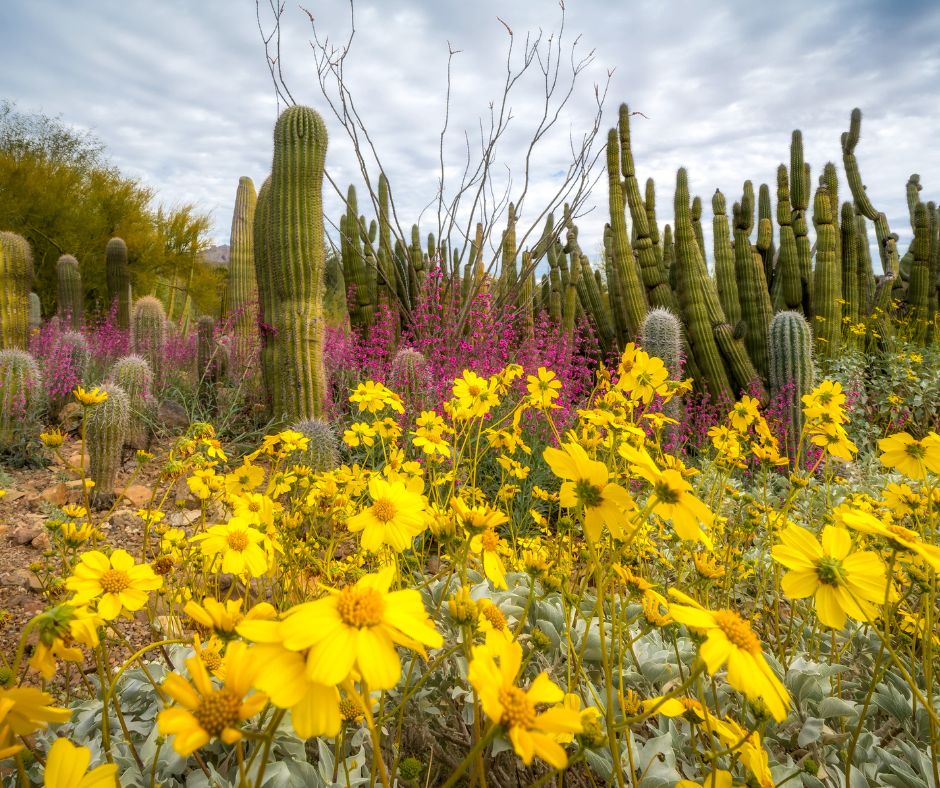
As our city continues to grow, what will sustain a thriving bee fauna is not just a few spectacular gardens, but rather a network of small patches of pollinator habitat scattered throughout our city. Your yard or pollinator garden doesn’t need to be perfect to provide habitat for bees. I am reminded of the popular saying that it takes a village to raise a child. This is as true for bees as it is for children!
Sources:
Ollerton, J, R Winfree, S Tarrant (2011) How many flowering plants are pollinated y animals? Oikos 120: 321-326.
https://doi.org/10.1111/j.1600-0706.2010.18644.x
 Desert Diaries