A Tale of a Resilient Santa Cruz River and its Tiny Topminnow
By Claire Zugmeyer and Luke Cole, PhD | Sonoran Institute
Fall is a festive time of year, temperatures start cooling off and we celebrate many events and holidays with family and friends. Sonoran Institute’s annual fish survey provides yet another reason to celebrate. This is an opportunity to see firsthand what may sound obvious—clean reliable water is essential for everyone, including the survival of fish and other aquatic species in our Santa Cruz River.
Rivers, washes, and associated riparian areas (the vegetation and environment along the banks of these winding features) represent only 2% of the landscape in the Southwest. Though rare, they are utilized by 80% of wildlife species and provide numerous benefits to adjacent communities. Stewardship and protection of these important areas require an understanding of a river’s health and changing conditions. Measuring “health” indicators, like a doctor measuring a patient’s blood pressure or other vitals, can help provide insight.

Fish are an indicator of river health because they live for years, providing information about the long-term quality and quantity of the water in the river. Tracking presence, or absence, of fish and the number of species found from one year to the next can help highlight changing conditions in the river. They are also essential for the health of the river ecosystem, acting as predators, prey and nutrient cyclers.
Historically, the Santa Cruz River supported several native fish species including Gila topminnow, desert sucker, Sonora sucker, and longfin dace. But fish numbers have declined precipitously, and one pupfish species went extinct when the river ceased to flow. Most reaches of the river have ceased to flow year-round because of over-pumping of groundwater. Still, some stretches of the river have been kept flowing with the release of effluent (highly treated wastewater) from sewage treatment plants, also called reclamation facilities. But over time, the quality of the water in the river decreased and no longer supported many fish.
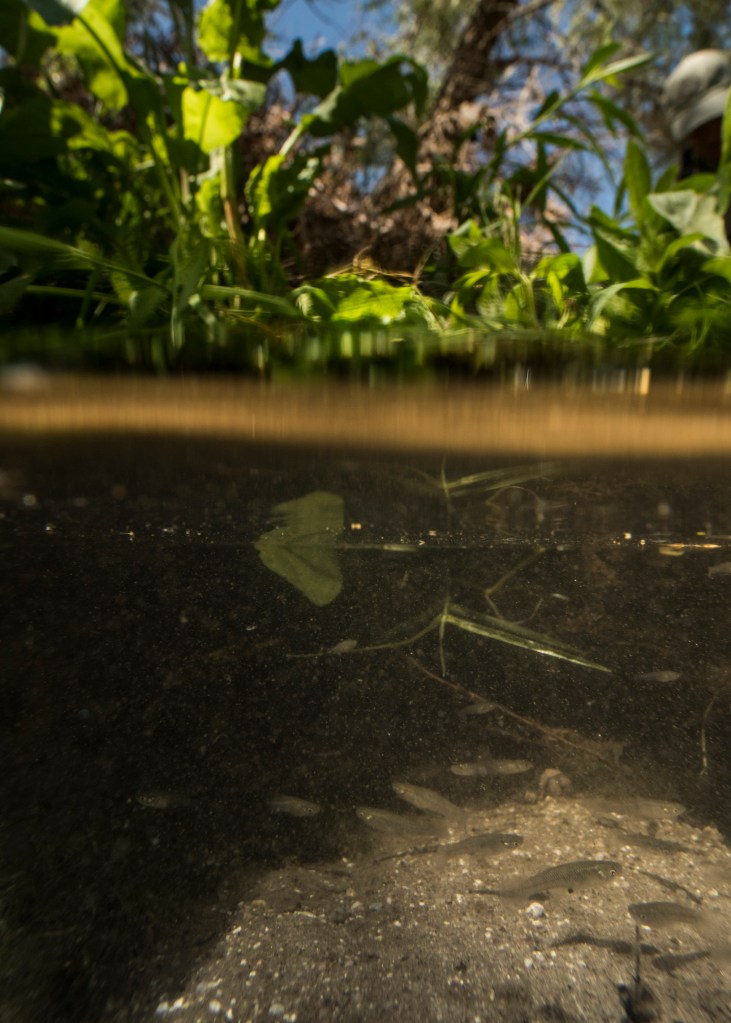
Since 2008, Sonoran Institute has coordinated an annual fish survey along the Santa Cruz River. The first survey—in Santa Cruz County—found only 2 individual longfin dace downstream of the Nogales International Wastewater Treatment Plant. This was a baseline before the upgrades were completed in 2009, which would significantly improve the quality of water released from the treatment plant into the river. A similar sequence was observed in the Tucson reach downstream of the Agua Nueva and Tres Rios Wastewater Reclamation Facilities, where only a single species was found in 2013, just before upgrades were completed.

A major goal of the facility upgrades was to remove more ammonia, which can be toxic to fish and amphibians, from the wastewater. Following upgrades, conditions for fish improved with not only significantly lower levels of ammonia, but also higher levels of dissolved oxygen. This created a resurgence of fish in the river, with surveys documenting as many as ten species over the years.
Most exciting is the return of the endangered Gila topminnow (Poeciliopsis Occidentalis), a small native fish that had once been common in all the waterways of the Gila River basin. They had all but disappeared from the Santa Cruz River. Our annual survey first detected the Gila topminnow in Santa Cruz County in 2015, over 12 years since it was last seen in the river near Tumacácori National Historical Park, and 6 years after the upgrades occurred. The topminnow made a faster reappearance in Tucson, showing up in 2017, only 4 years after the upgrade, but a whopping 70 years since it was last observed in the river.
Since their reappearance, monitoring the status of the Gila topminnow has been a major goal of Sonoran Institute’s annual fish survey. But this is no easy feat. Because several look-alike species live in the river, we use lab identification to accurately track the return of the endangered Gila topminnow.
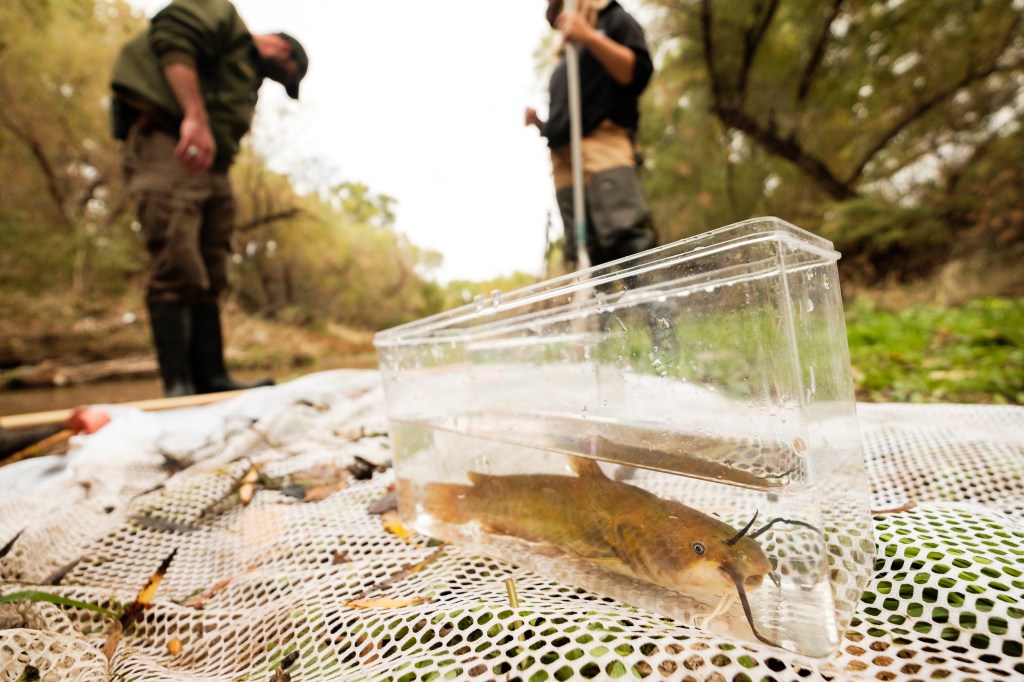
Gila topminnow appear to be sticking around, even though Western mosquitofish (Gambusia affinis) are known to outcompete and even eradicate topminnow when living in the same water body. At some sites, topminnow have at times outnumbered mosquitofish. However, there is a new complication. Genetic analysis of the Gila topminnow discovered the presence of a third nearly identical species—the Poeciliopsis occidentalis-monacha, an all-female hybrid of the Gila topminnow and the headwater livebearer, a closely related fish species found in Sonora, Mexico. This hybrid exploits Gila topminnow for reproduction, discarding the male genome and producing offspring that are clones of the hybrid females. It’s uncertain what the presence of this hybrid will mean for the topminnow and continued monitoring will be needed. For now, it appears that the topminnow are holding their own.
The story of the Santa Cruz River is one of resilience. Each fall, as we wade into its cool, flowing waters to conduct the annual fish survey, we’re reminded that river recovery is possible. Clean, reliable water has brought life back to a river that once ran dry—schools of native fish, dragonflies darting overhead, and the quiet return of species that had effectively vanished. Every fish we catch and release tells part of that story.
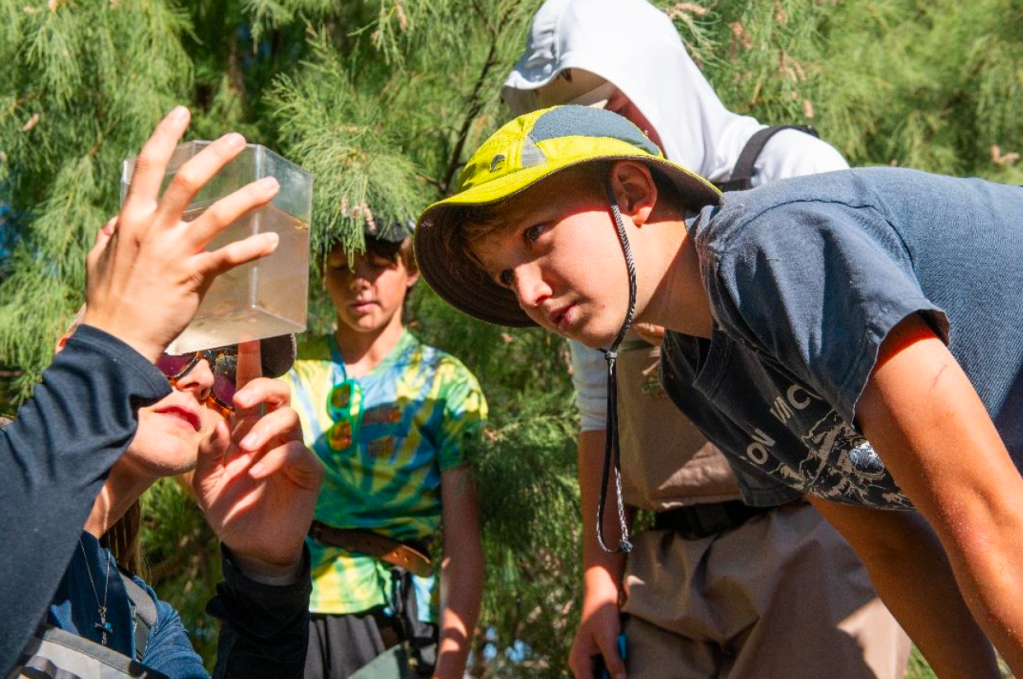
This recovery didn’t happen by chance. It’s the result of years of community effort, strong partnerships, and science guiding better decision-making. But the work isn’t done. Protecting what has returned—and ensuring it thrives—requires continued collaboration and vision.
That’s why Sonoran Institute and our partners are working toward the creation of the Santa Cruz River National Wildlife Refuge, stretching from Nogales to Marana. This designation would help safeguard the river’s wildlife and cultural history, while growing a network of people who value this living desert river.
To learn more about the proposed refuge and how you can add your voice, visit santacruzriver.org. For a deeper look into how the river’s health continues to evolve, explore our bilingual Living River reports at sonoraninstitute.org/resource_tag/living-river/
 Desert Diaries