As we wrap up another year and orient toward a new season, we are happy to share major highlights and exciting developments from our diverse range of conservation projects here at the Arizona-Sonora Desert Museum. It’s been a year packed with community partnerships, collaborative conservation initiatives, and innovative research.
Invasive Species and Save Our Saguaros Month
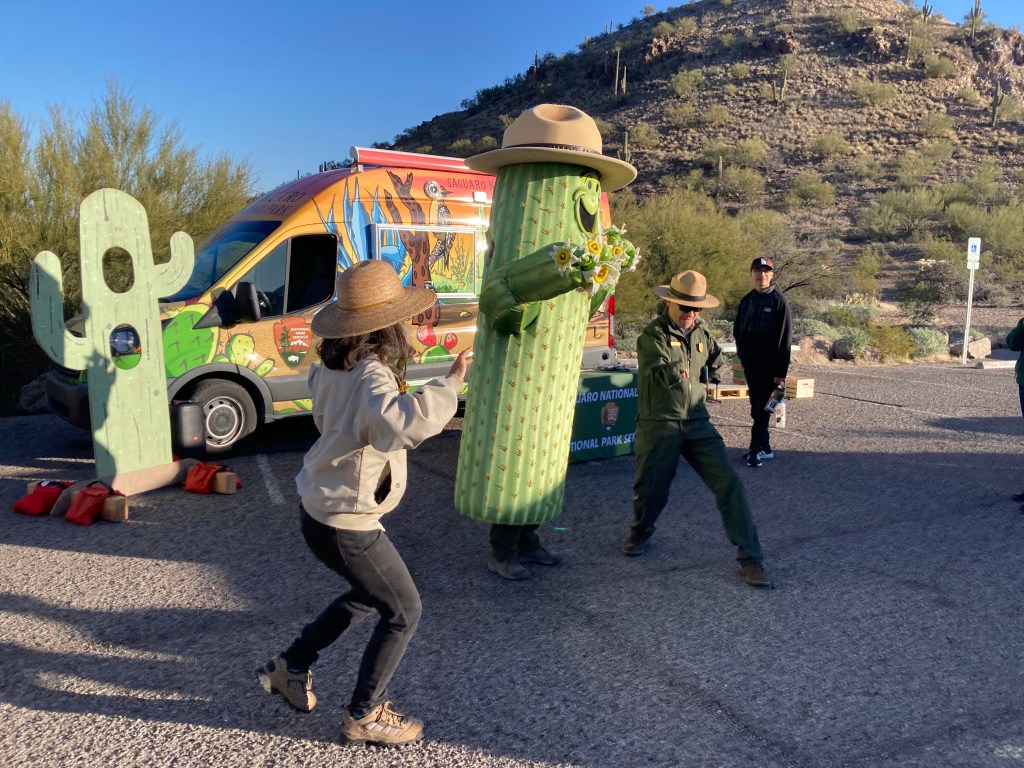
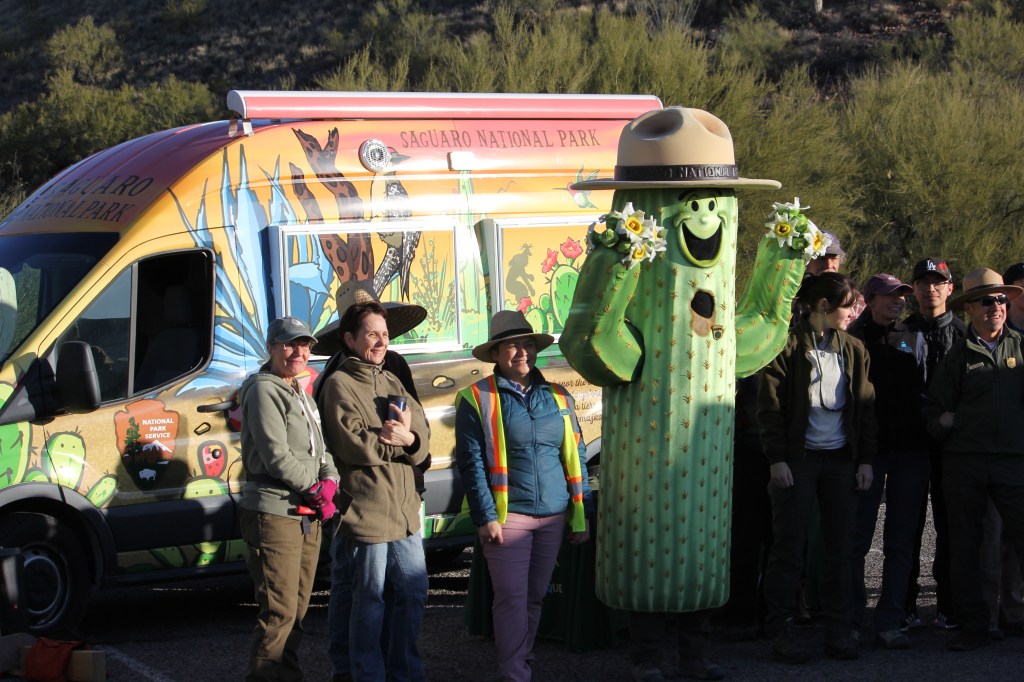
‘Tis the season … to Save Our Saguaros! Mark your calendars, as we are looking forward to our annual Save Our Saguaros Month Kickoff at Sentinel Peak Park (“A” Mountain) on Saturday, February 3, 2024. Last year we had more than 50 volunteers show up, who not only pulled a ton of buffelgrass, but had a great time dancing with Sunny the Saguaro from Saguaro National Park. We are focusing on growing our volunteer base, so we were thrilled to see ten volunteers from last year’s Kickoff Event become regulars, participating in at least three pulls throughout 2023. Perhaps this is YOUR year to become a saguaro steward? Our volunteers rally hard: throughout the year we pulled more than ten acres of buffelgrass throughout Tucson Mountain Park! We can’t wait to see familiar faces and new recruits at this year’s kickoff pull.
A small setback on Tumamoc Hill couldn’t stop us from continuing our invasive species management efforts. Although we were unable to treat buffelgrass with herbicide on Tumamoc Hill due to minimal rain at that location, we shifted gears to tackle 72 acres of low-density buffelgrass (this area is low-density because it has been previously treated) near Starr Pass Resort with our partners at Pima County Natural Resources Parks and Recreation. We prioritize maintaining previously treated areas before moving on to new infestations to protect our past investments.
Look out for the Weed Mapping Community Science Project, which will expand in 2024 with the release of a public website, more invasive species identification resources, innovative mapping initiatives, and more.
Additionally, we’re excited to welcome Perry Grissom, a retired Saguaro National Park expert, who has joined our team part-time to develop educational materials on invasive species for professionals in the natural resources management and landscape contracting industries. Welcome to the team, Perry!
Native Bees
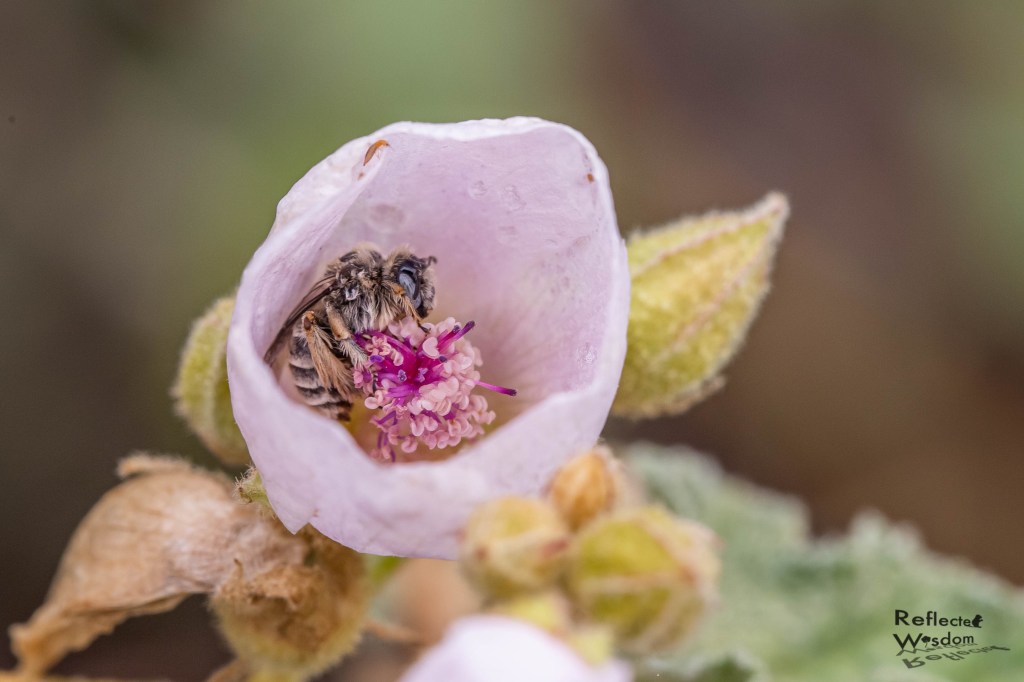
Our bee-utiful bee research was a hit this year! The Sonoran Desert Region is home to more bee species than just about anywhere else in the world. Through the Tucson Bee Collaborative (TBC), we’re building a comprehensive collection of the Sonoran Desert’s astonishing variety of native bees. Picture this: every single bee species in the region, documented with crystal clear high-resolution images and their own unique DNA barcode.
But this collection isn’t just about advancing bee understanding and conservation. An equally important aspect of the TBC is the work we do with students and our broader Tucson community. Through partnerships with schools and universities, diverse NGOs, and the artists, scientists, conservationists, and others who support the TBC, we are creating a vibrant collaborative that nurtures the next generation of scientists and promotes a shared sense of place. This year we engaged 2,300 K-16 students in TBC education programs and involved nearly 5,000 total bee observers in community science!
While taking a pause on quantitative bee sampling, we focused on identifying the bees in our existing collection. We partnered with 50 students from Pima Community College and the University of Arizona to DNA barcode 75 native bees. This endeavor not only advances bee conservation but also involves students in authentic research in which they identify native bees through DNA barcoding technology, fostering the development of future environmental professionals. What could bee better?! The program has been so successful that our partners at the University of Arizona and Pima Community College are preparing a NSF grant proposal that would enable us to expand this work, by teaching this model to faculty at both institutions. Bee-yond cool!
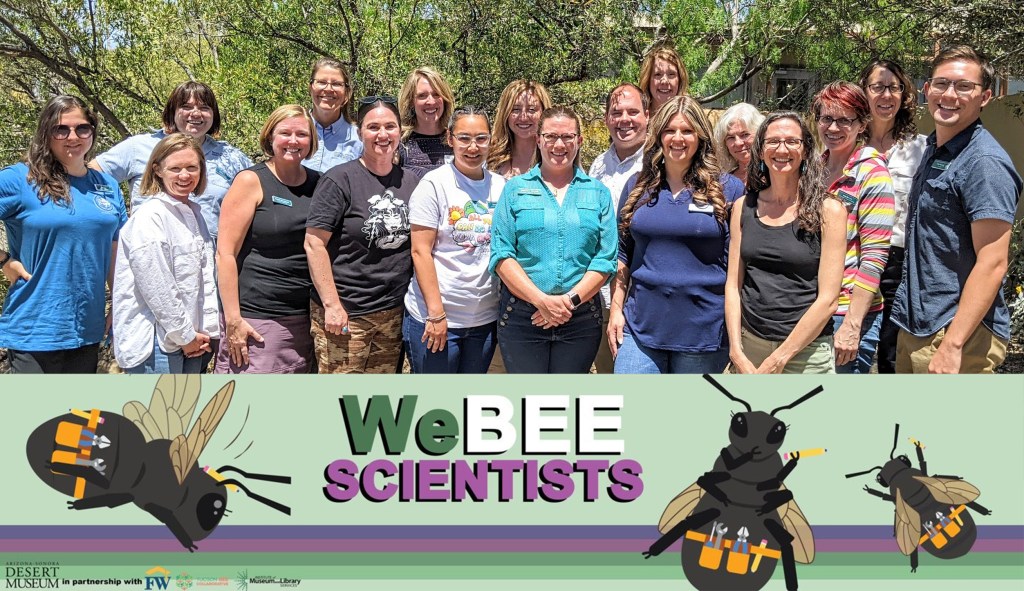
But the buzz doesn’t stop there. (This will bee our last pollinator pun, we promise.) We’re also bringing bees to the classroom through We Bee Scientists, a project of the Tucson Bee Collaborative. Building on last year’s foundational work, we are developing a pollinator-focused curriculum for K-6 and high school grades in collaboration with teachers in the Flowing Wells School District. The work continues in 2024 with exciting new developments we can’t wait to share.
Biodiversity Education
Hold onto your sunhats because biodiversity education is taking flight. In 2023, we doubled community participation at our Biodiversity Party (see photos below!), where our community comes together to BioBlitz in a day as part of the City Nature Challenge AND Teacher Appreciation Night, where Tucson teachers and support staff can enjoy an evening at the Desert Museum for free to wrap-up our Cool Summer Nights series, while chatting with our educators about biodiversity curriculum.

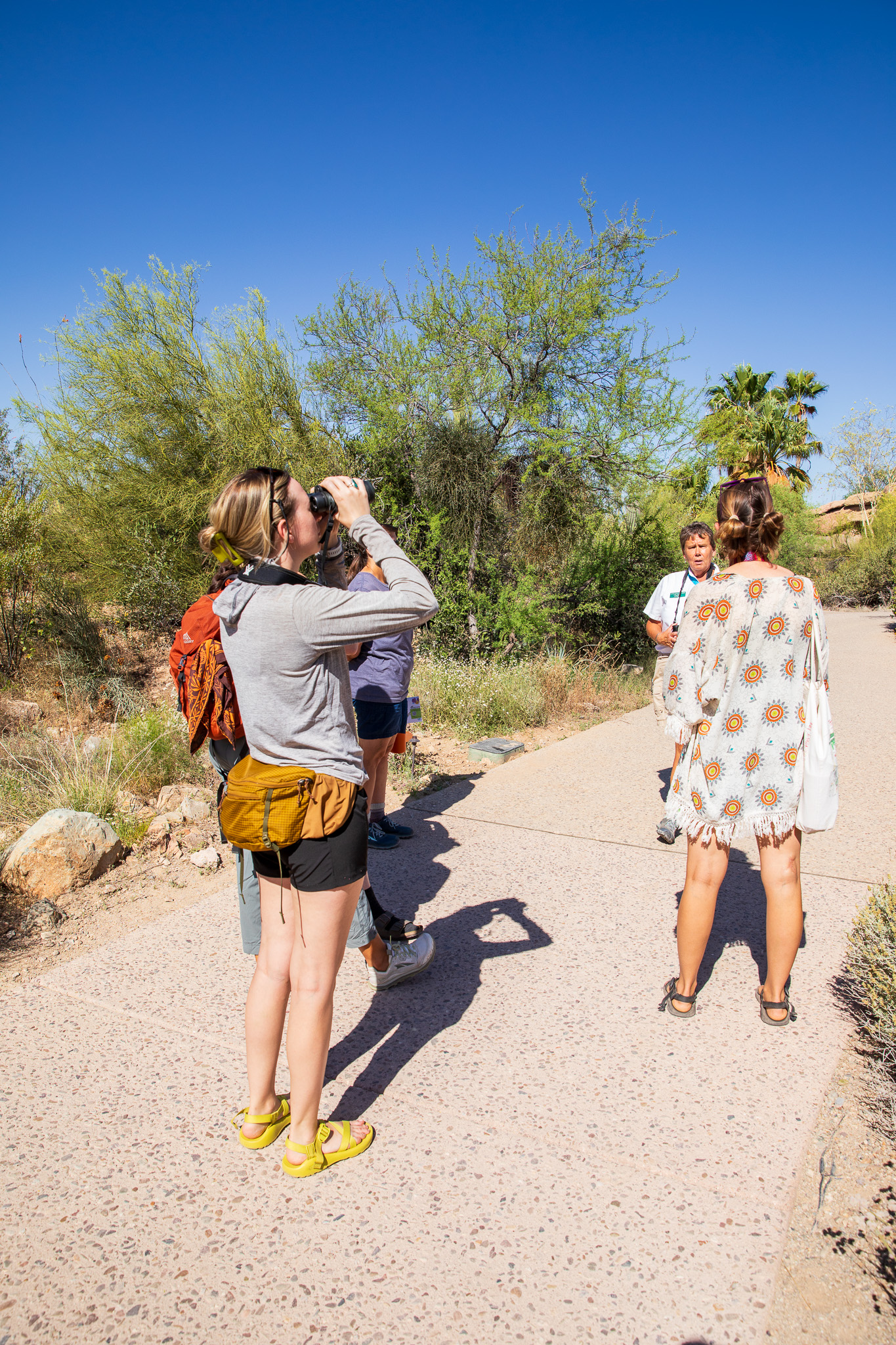

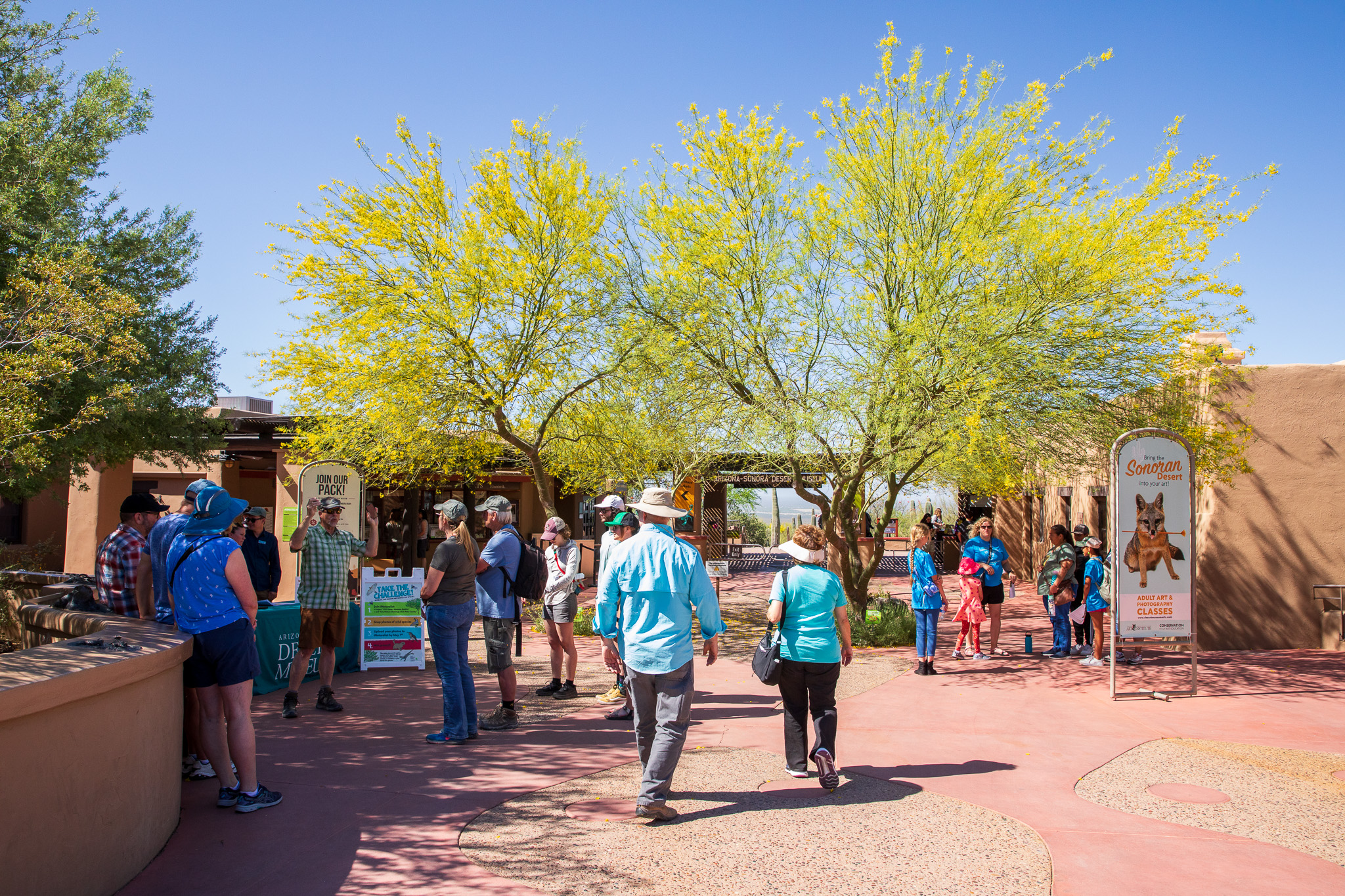
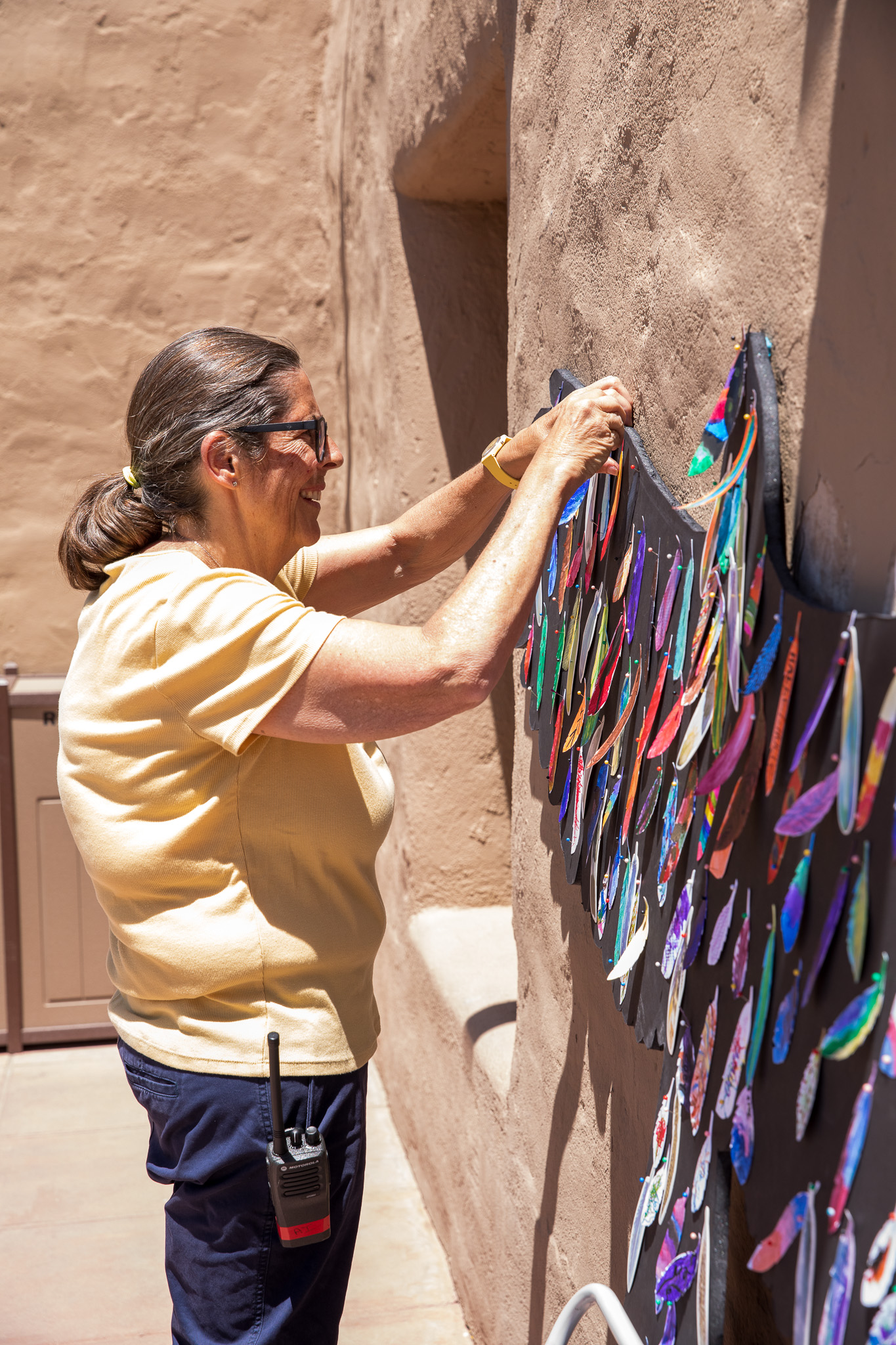
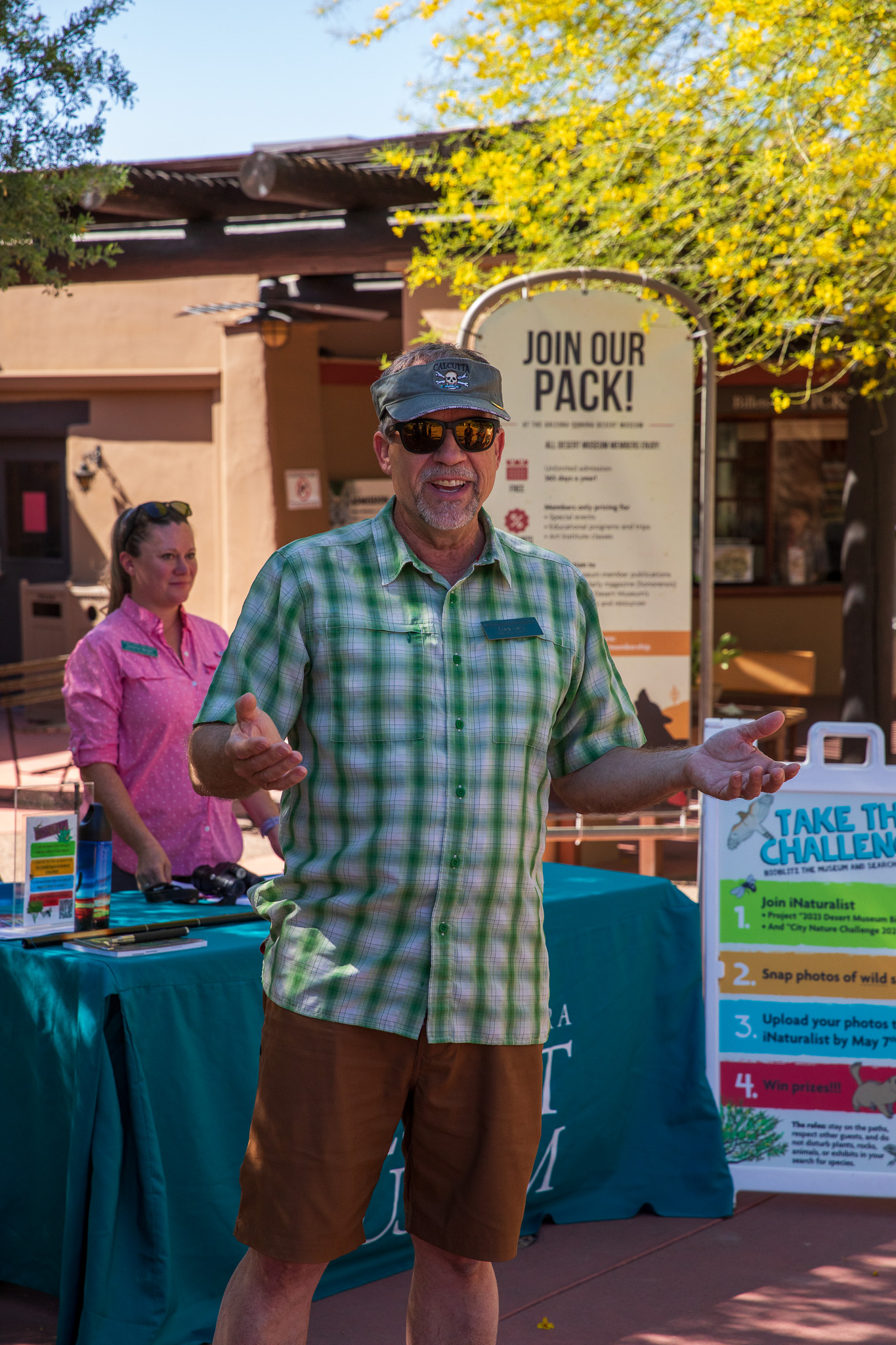
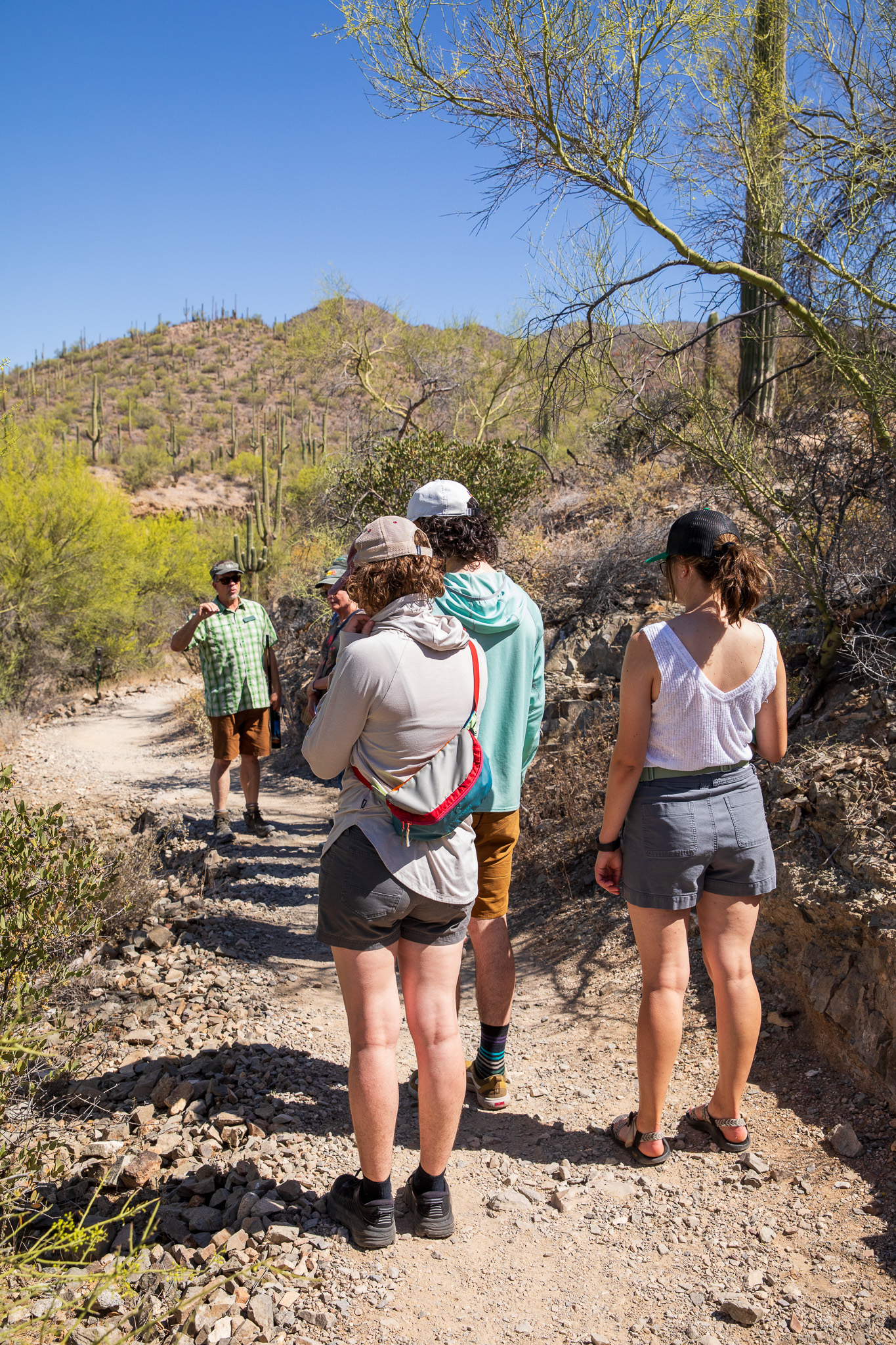
Students can learn about where they live by taking field trips to the Desert Museum to see native animals and plants. This year we hosted 20,500 field trip participants! Additionally, our passionate team of educators engaged thousands of students in school, library, and other community outreach programs, sharing about the interesting animals, plants, and people of the Sonoran Desert region. We also had another successful year of youth camps, including three camps for San Xavier District students, diving deep into subjects like biomimicry, ethnobotany, and biodiversity.
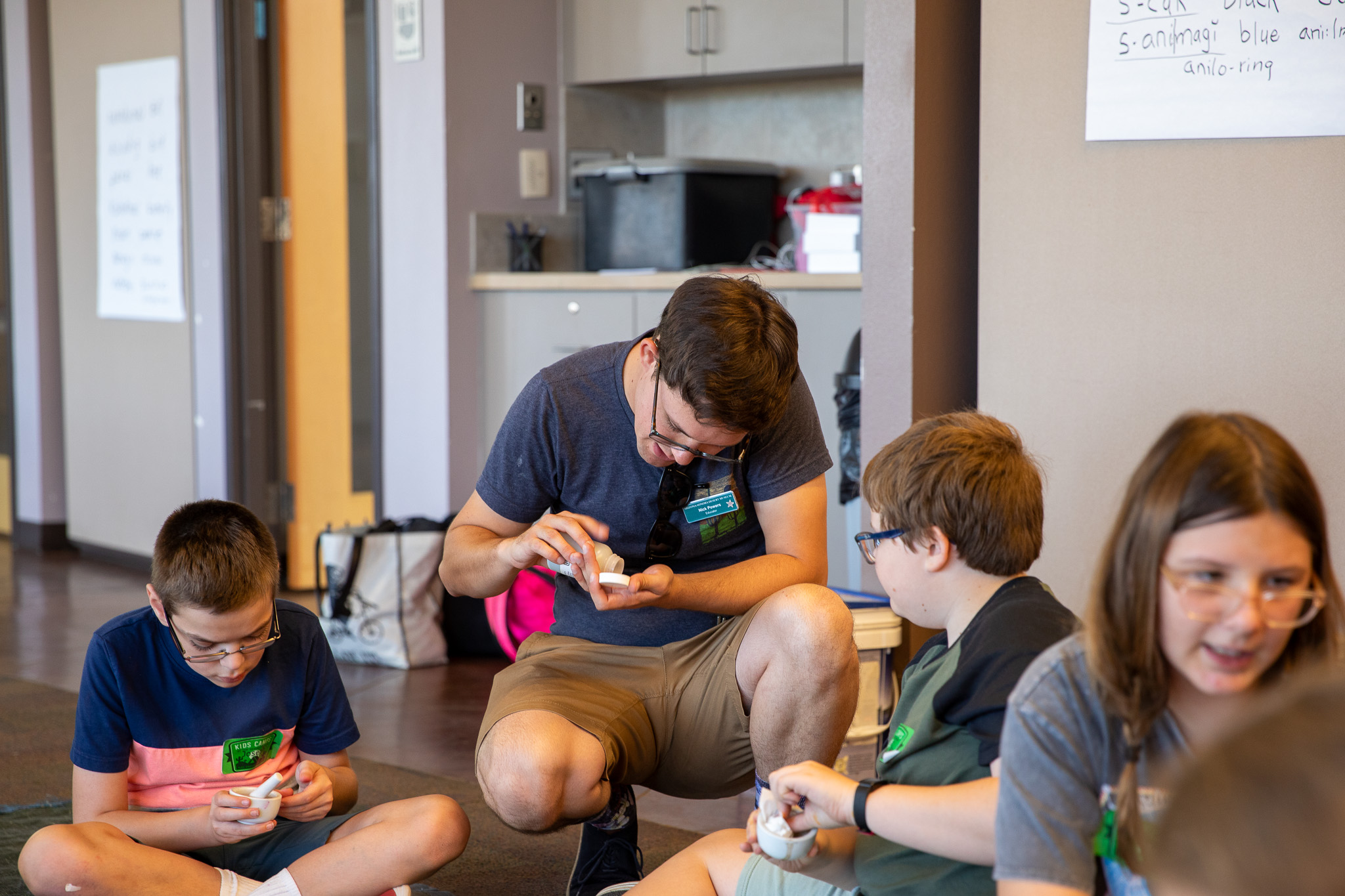
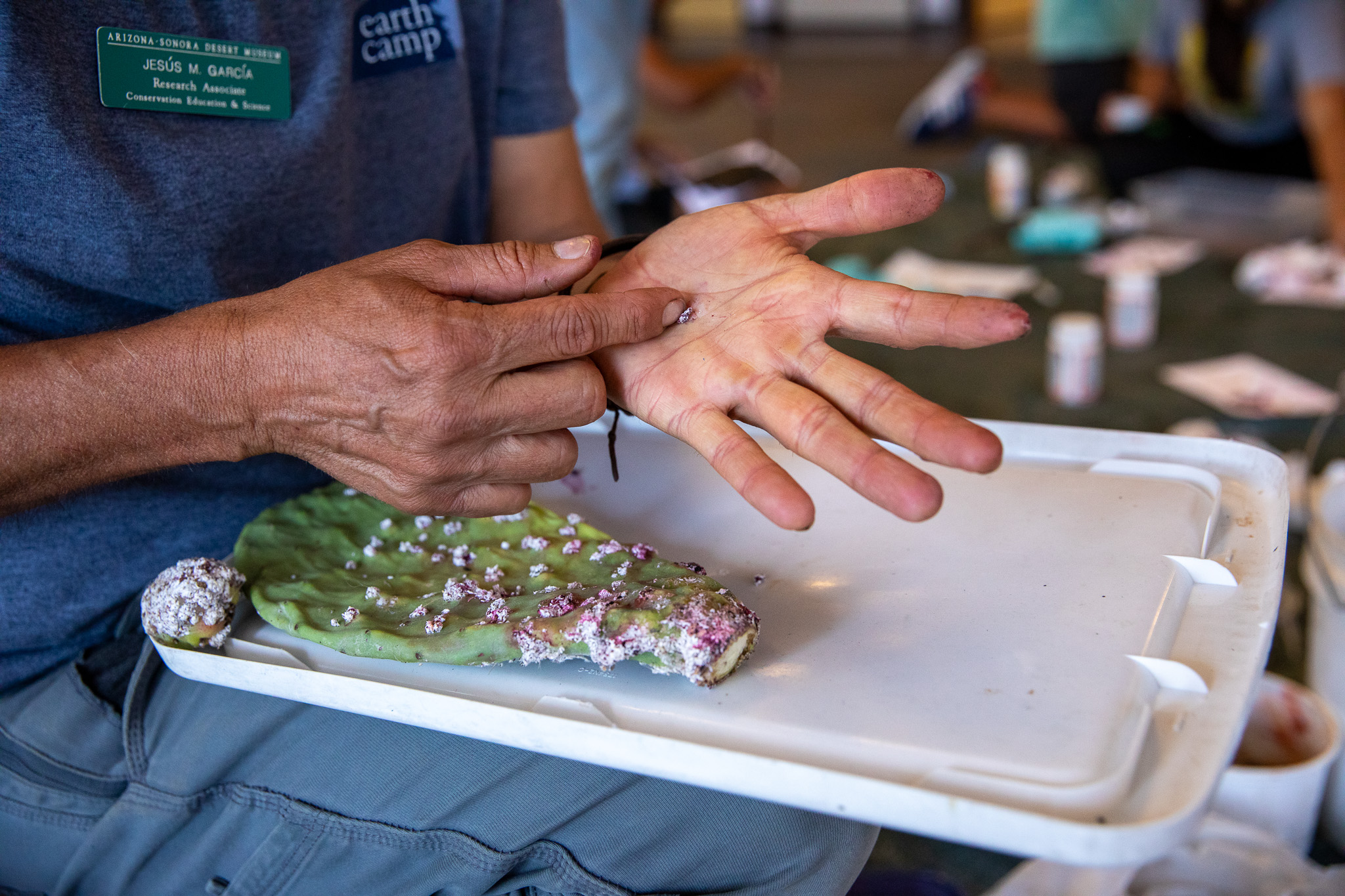
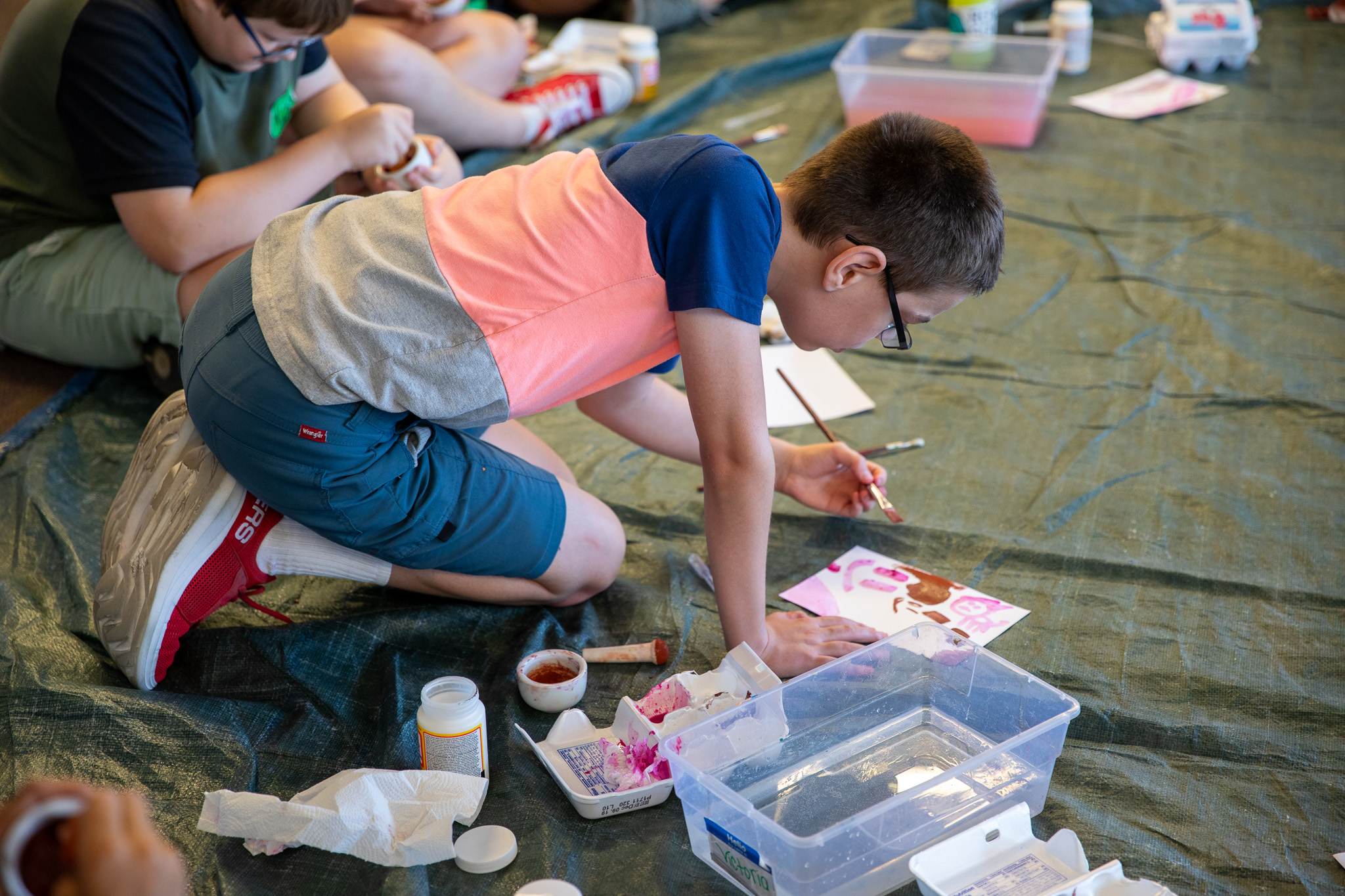
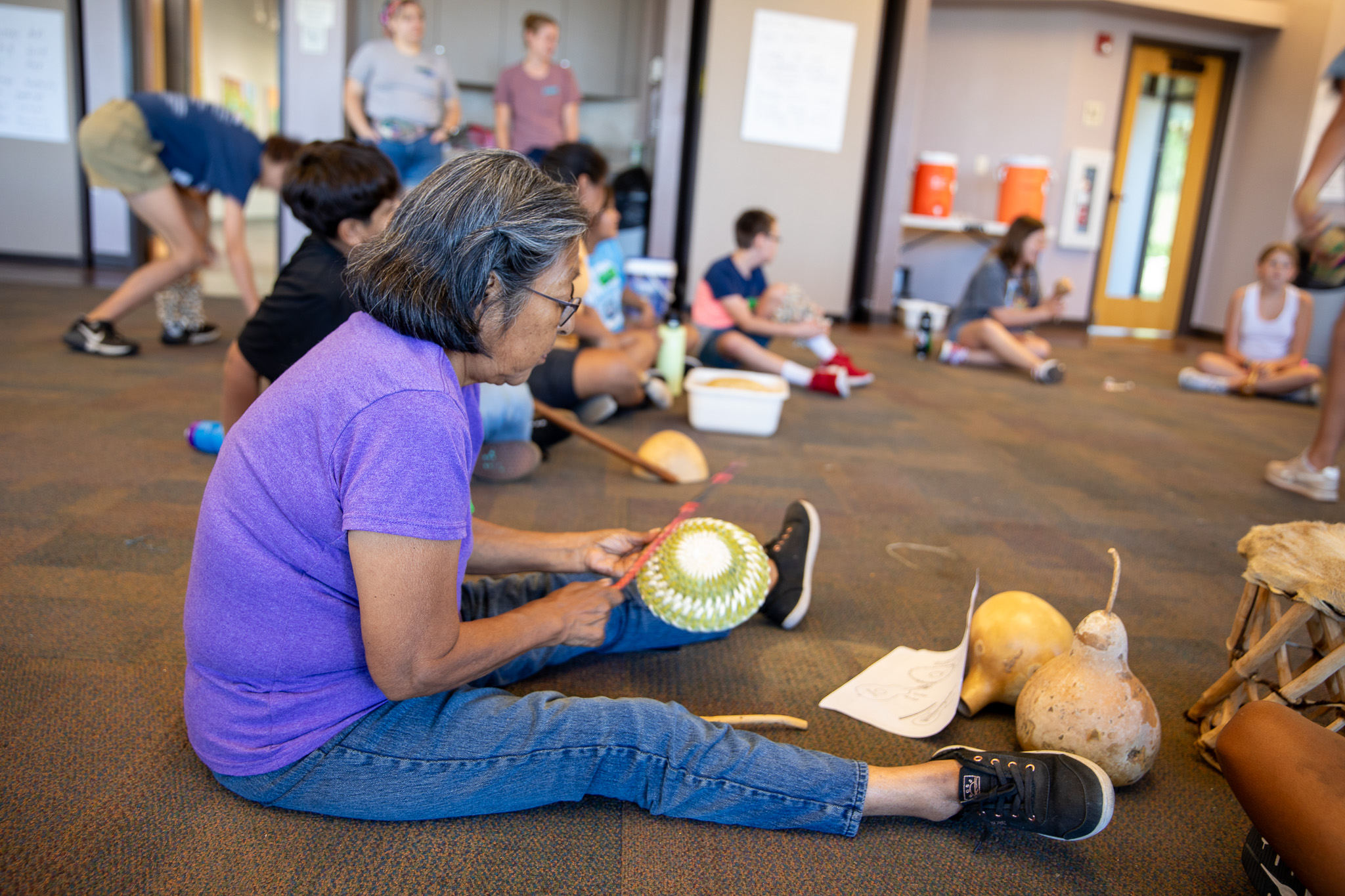
In our Colors of the Desert Camp, campers learn how to paint with natural pigments and make music with traditional instruments!
While the Desert Museum makes for a fun place to explore and learn, we appreciate our partnerships with fellow organizations in Tucson that allow us to connect with new audiences throughout the area. This year we nurtured partnerships through community events and programs with organizations like Mission Garden and the Agave Heritage Festival, Las Milpitas Community Farm, the Pima County Public Library, the University of Arizona Department of Entomology’s annual Insect Festival, Owl and Panther, the University of Arizona’s School Garden Workshop, and more.
Crop Wild Relatives
Crop wild relatives are the wild growing relatives of agricultural crops cultivated for food, fiber, beverage, or industrial use. For example, the Mexico native chiltepín (Capsicum annum) is the wild relative of a large number of sweet and hot chili pepper varieties lining our grocery produce shelves, including jalapeño, poblano, and cayenne peppers. As a source of genetic diversity for the development of robust and sustainable food crops, these resilient plants may hold the key to safeguarding food security in the age of climate change.
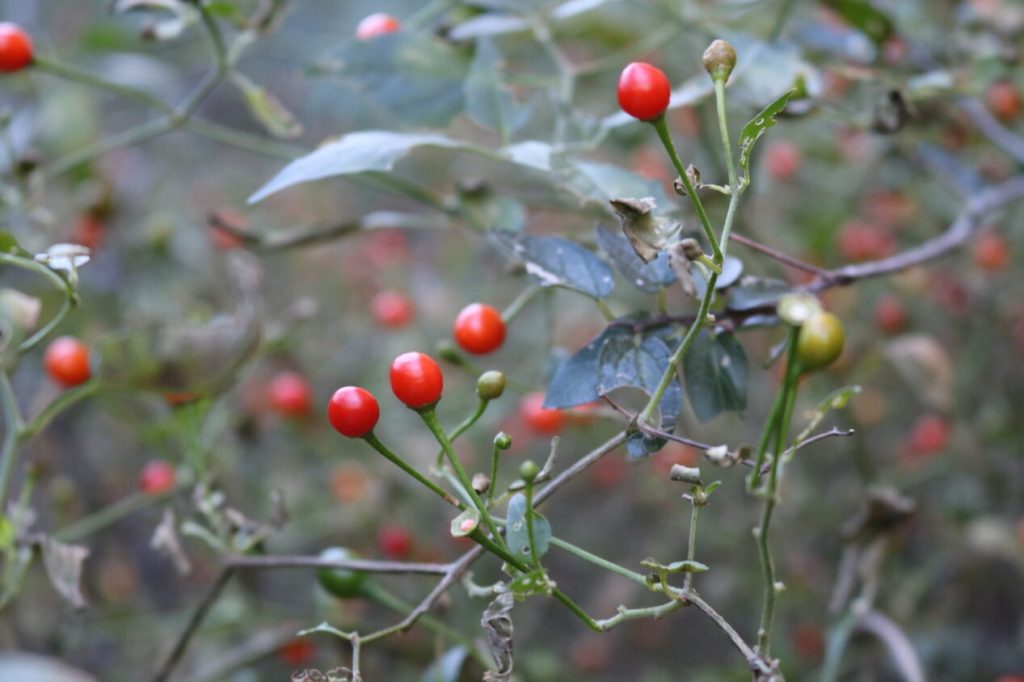
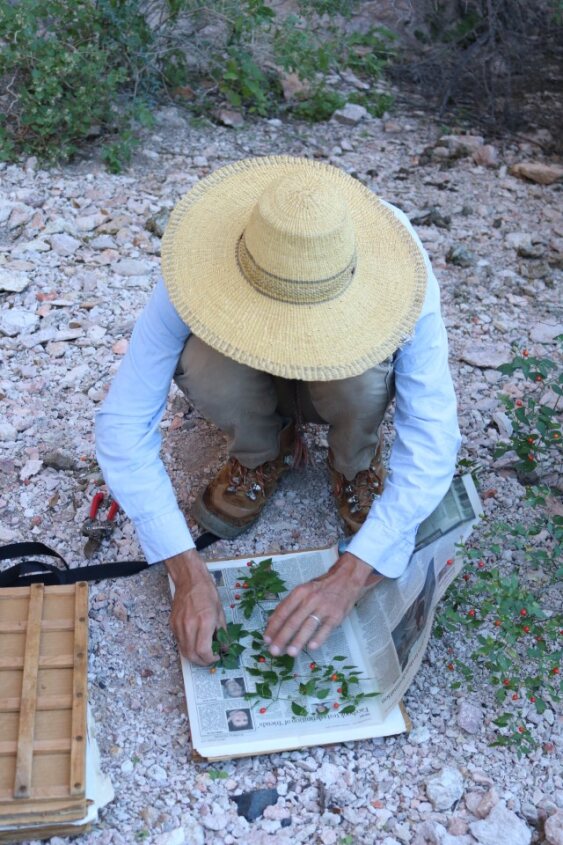
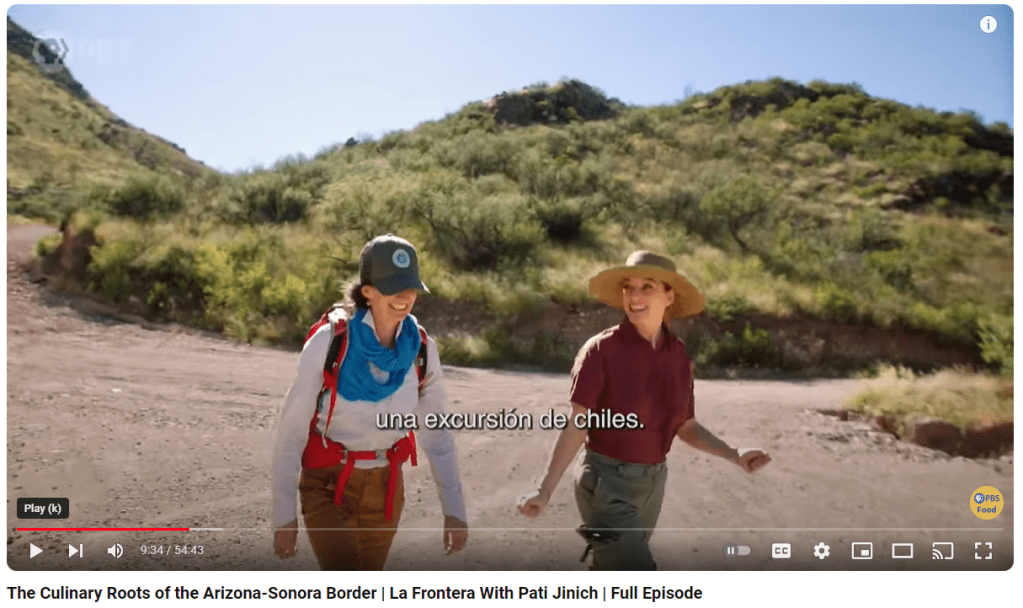
Sadly, many of these botanical gems face threats in their natural habitats. Our science team is pioneering a conservation initiative geared toward protecting the native plants of the Sonoran Desert, especially those closely linked to our food crops. This year we initiated the Sonoran Desert Crop Wild Relative Conservation Working Group with regional botanical gardens and scientists. You can learn more about this project on PBS’s La Frontera with Pati Jinich.
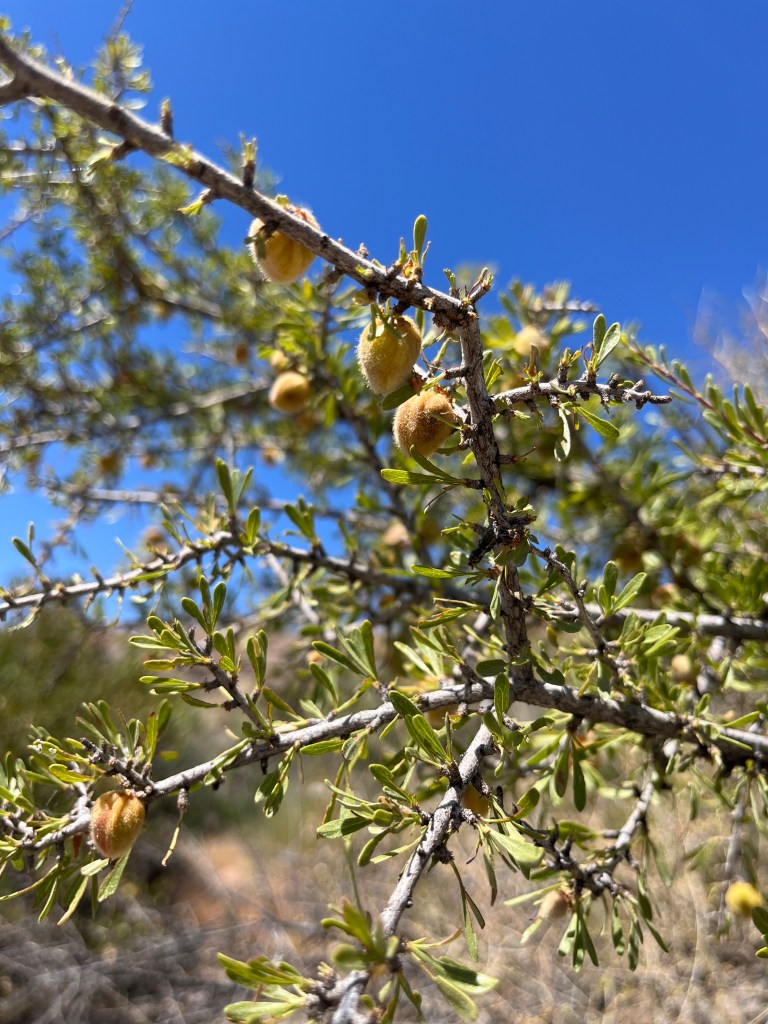
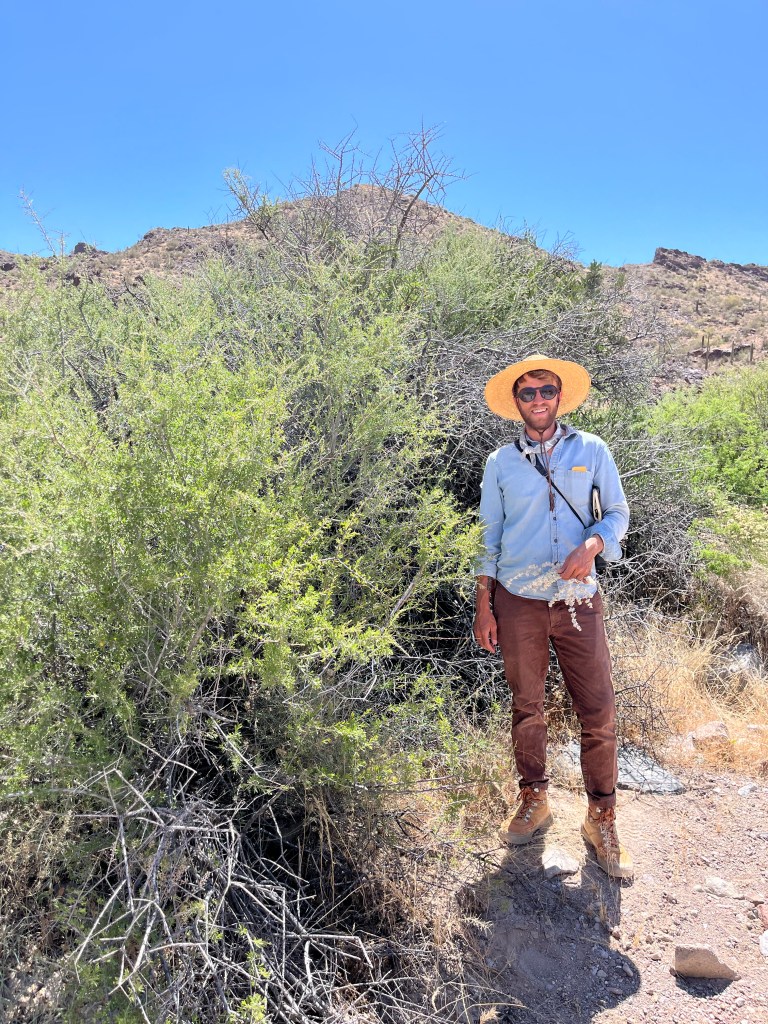
Our Science and Botany departments collaborated on an expedition to locate and gather the wild desert almond (Prunus fasciculata). This tough nut is a heat- and drought-tolerant cousin of almonds and stone fruits like peaches, apricots, and plums. Seeds harvested from the Kofa Mountains are being propagated and nurtured into a vital living collection right here at the Museum, safeguarding these plants for generations to come.
It’s not just about planting seeds—we’re working collaboratively to cultivate a resilient future. Joined by the University of Arizona, the University of Maryland Center for Environmental Science, and Local First Arizona, we are also forming the Arizona Alliance for Climate Smart Foods to foster a food future for Arizona that relies less on water and more on native crops. This three-year project, funded by the USDA’s new Partnerships for Climate-Smart Commodities program, will empower us to build consumer awareness and markets for these climate-smart foods, as well as work directly with Arizona farmers match dryland-adapted crops, such as agave and tepary beans, with low-water use agricultural practices.
Looking Ahead
The desert reminds us that life is both fragile and astonishingly resilient. As this time of year is a powerful season of gratitude and reflection, we end our yearly wrap-up with an invitation to consider the question: What lessons has the desert taught you this year?
We wholeheartedly extend our gratitude to all who’ve supported our mission, as we are united by a shared love of this unique place and a desire to protect it for future generations. Here’s to a new year of continued growth, community collaborations, and impactful conservation efforts at the Arizona-Sonora Desert Museum!
 Desert Diaries